
Rome, Open City 1945 ITA SUB ENG 1080p BluRay x264
 Download Torrent
Opens in your torrent client (e.g. qBittorrent)
Download Torrent
Opens in your torrent client (e.g. qBittorrent)
Health
Excellent26/0
Info HashE7A03D950358697D6188476299FD9C7F5FC85DEA
Peers Updated1 day ago (2026-08-12 00:28:00)
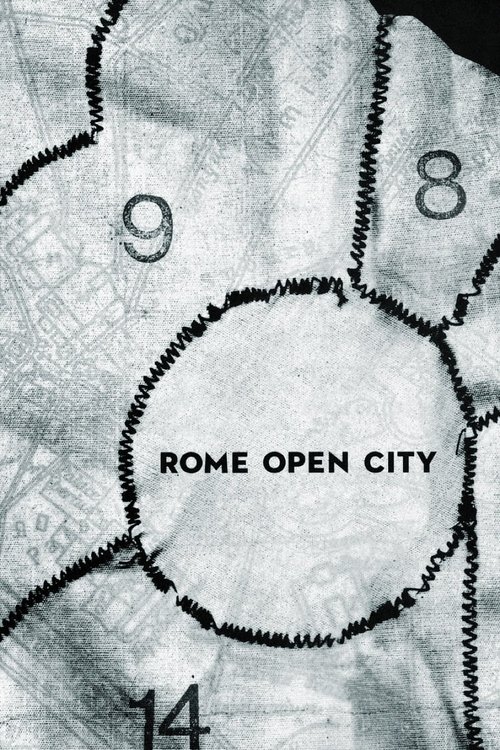
Rome, Open City
983 votes
Our battle has barely begun.
During the Nazi occupation of 1944 Rome, Resistance leader Giorgio Manfredi is pursued by the Nazis as he seeks refuge and a means of escape.
Director: Roberto Rossellini
Cast: Aldo Fabrizi, Marcello Pagliero, Harry Feist, Anna Magnani, Maria Michi
Cast: Aldo Fabrizi, Marcello Pagliero, Harry Feist, Anna Magnani, Maria Michi
Description
Year: 1945
Country: Italy
Director: Roberto Rossellini
Cast: Anna Magnani, Aldo Fabrizi, Marcello Pagliero, Harry Feist
IMBD: Link
Language : Italian
Subtitles : English
Nowhere is this combination and interpenetration of Catholicism and Communism more apparent than in Roberto Rossellini’s Roma città aperta, whose three protagonists, the Catholic priest Don Pietro, the Communist partisan leader Manfredi (who fights under a decidedly Christian pseudonym, Giovanni Episcopo), and Pina, pregnant fiancée of the partisan Francesco, are all martyred in Christ-like fashion, with Manfredi’s death reflecting the iconography of the Crucifixion and Pina’s that of the Pietà. Some have seen in such imagery “una cristiana esigenza [a Christian exigency],” declaring neorealism to be “rigorosamente cristiano [rigorously Christian.]” Others have ascribed the film’s appropriation of Christological themes to a vaguely conciliatory Christian humanism, an effort to avoid the divisive politics of an anti-Fascist Resistance that had been nothing less than an Italian civil war. Yet Rossellini’s film was neither as conventionally Catholic nor as evasively conciliatory as such explanations would suggest. Instead, it offered a formidable challenge to the status quo.
Appropriating the Catholic sacraments to consecrate the Resistance, and appropriating the “sacrificial memory” of the Resistance martyrs to consecrate a new post-war order, Roma città aperta claimed, in a very real sense, to speak for the dead in order to authorize its own projection of a new faith for a new Italy. Indeed, although the film narrates events of the recent past – its working title was Storie di ieri (Stories of yesterday) – it is decidedly focused on the future, on the emerging post-war order. When Francesco reassures Pina of the impending victory of the Resistance, it seems clear he is speaking with a foresight shaped by the filmmakers’ experience of the war’s conclusion. “Noi lottiamo per una cosa che deve venire, che non può non venire [We’re fighting for something that has to be, that can’t help coming],” he hopefully declares.
“Forse la strada sarà un po’ lunga e difficile, ma arriveremo e lo vedremo un mondo migliore, e lo vedranno soprattutto i nostri figli [Maybe the way is hard, it may take a long time, but we’ll get there, and we’ll see a better world! And our kids’ll see it!]” Such pronouncements not only endorsed Italy’s post-Fascist reconstruction as the fulfilment of the anti-Fascist Resistance, reminding viewers that their present freedom had been guaranteed by past sacrifice, but also revealed the political eschatology of the film’s images of Christian martyrdom, whose redemption was emphatically immanent rather than transcendent. Roma città aperta, in other words, offered a kind of prophecy of the civil religion of the Resistance, channelling its “religious impulse” towards the film’s symbolic vision of Italy’s impending resurrection. Pina’s Pietà, Manfredi’s Crucifixion, and Don Pietro’s execution thus served to endorse Roma città aperta’s own spiritual and temporal authority, its prerogative not only to portray but also to define fundamental aspects of Italy’s post-war
reformation. This was something more than an expression of Catholic faith or Christian humanism. It was a self-benediction, claiming for a film – or, better still, claiming for cinema, and indeed for culture – the symbolic authority to direct society.
From this point of view, chorality can be seen to constitute the most significant artistic expression of neorealism’s politics. Consider what I have called Roma città aperta’s appropriation of the “sacrificial memory” of the Resistance, which authorizes the film’s vision of post-war reconstruction. In the course of the narrative, three successive deaths – the murder of a popolana, the torture of a partisan, and the execution of a priest – come to constitute a kind of “collective martyrdom,” a shared sacrifice borne by the Roman community, which presages the collective redemption of the Italian people. With each casualty the film’s subjective centre
effectively shifts, from Pina to Manfredi, from Manfredi to Don Pietro, before it achieves true chorality, a collective voice, in the whistles of the children who witness the priest’s execution, and who are tasked metaphorically with rebuilding the country in the image of resistance that this tragic event has imparted. Chorality in Roma città aperta, authorized by the film’s Resistance martyrs to re-envision the country after Fascism, thus serves symbolically to create a collective conscience, a metonymic figuration of the post-war Italian body politic. This cinematic expression of a powerful vision of national unity was decidedly aspirational, a creative invention of Rossellini’s film itself. This is not to say, however, that the aspiration was expressed only in that film. Well beyond Roma città aperta, in fact, neorealist chorality can be understood performatively to have enacted a new democratic polity, one not yet present in the theatre of political action but already mobilized symbolically in the realm of art. The foundational move that facilitated chorality, therefore, was the representational claim to a kind of proxy from below, the right to speak for the people, including those partisans martyred to the cause of Italian liberation, and to dictate in their name the terms of the post-war order. This was a profound claim, and an audacious one. To justify it, artists and intellectuals sought to take on a new role and a new social status, publicly rejecting their traditional prestige and forgoing their participation in what Franco Fortini described as the “cosiddetto mondo della cultura, col suo orgoglio di scriba, il suo sprezzante servilismo di oggetto di lusso [so-called world of culture, with its scribe’s pride, its contemptuous and servile status as a luxury good].” Noi non tolleriamo più gli studi che sieno semplicemente ‘ornamenti’ [We no longer tolerate studies that simply serve as ‘ornaments’],” announced the art historian Ranuccio Bianchi Bandinelli. (Charles L. Leavitt IV)
[ About file ]
Name: Rome, Open City.Roberto Rossellini.1945.BluRay.HiFi.mkv
Date: Mon, 26 Jan 2026 12:43:52 +0100
Size: 16,627,216,604 bytes (15856.949429 MiB)
[ Magic ]
File type: Matroska data
File type: EBML file, creator matroska
[ Generic infos ]
Duration: 01:42:51 (6171.423 s)
Container: matroska
Production date: Sat, 05 Jan 2019 08:08:26 +0100
Total tracks: 3
Track nr. 1: video (V_MPEG4/ISO/AVC) [Video Track] {eng}
Track nr. 2: subtitle (S_TEXT/UTF8) [Subtitle Track] {eng}
Track nr. 3: audio (A_AAC) [Audio Track] {ita}
Muxing library: libebml v1.3.0 + libmatroska v1.4.0
Writing application: mkvmerge v6.2.0 ('Promised Land') built on Apr 28 2013 18:50:30
[ Relevant data ]
Resolution: 1480 x 1080
Width: multiple of 8
Height: multiple of 8
Average DRF: 20.123102
Standard deviation: 2.660218
Std. dev. weighted mean: 2.554011
[ Video track ]
Codec ID: V_MPEG4/ISO/AVC
Resolution: 1480 x 1080
Frame aspect ratio: 37:27 = 1.37037
Pixel aspect ratio: 1:1 = 1
Display aspect ratio: 37:27 = 1.37037
Framerate: 24 fps
Stream size: 16,378,374,746 bytes (15619.63534 MiB)
Duration (bs): 01:42:51 (6171.374901 s)
Bitrate (bs): 21231.411163 kbps
Qf: 0.553455
[ Audio track ]
Codec ID: A_AAC
Sampling frequency: 44100 Hz
Channels: 2
Stream size: 246,856,911 bytes (235.421096 MiB)
Bitstream type (bs): AAC LC (Low Complexity)
Frames (bs): 265,781
Duration (bs): 01:42:51 (6171.422766 s)
Chunk-aligned (bs): Yes
Bitrate (bs): 320 kbps VBR
Sampling frequency (bs): 44100 Hz
Mode (bs): 2: front-left, front-right
[ Video bitstream ]
Bitstream type: MPEG-4 Part 10
User data: x264 | core 142 r2431+42 c69a006 tMod [8-bit@all X86_64]
User data: H.264/MPEG-4 AVC codec | Copyleft 2003-2014
User data: http://www.videolan.org/x264.html | cabac=1 | ref=5
User data: deblock=1:-3:-3 | analyse=0x3:0x113 | me=umh | subme=10 | psy=1
User data: fade_compensate=0.00 | psy_rd=1.05:0.00 | mixed_ref=1 | me_range=64
User data: chroma_me=1 | trellis=2 | 8x8dct=1 | cqm=0 | deadzone=21,11
User data: fast_pskip=0 | chroma_qp_offset=-2 | threads=6 | lookahead_threads=1
User data: sliced_threads=0 | nr=0 | decimate=0 | interlaced=0
User data: bluray_compat=0 | constrained_intra=0 | fgo=0 | bframes=10
User data: b_pyramid=2 | b_adapt=2 | b_bias=0 | direct=3 | weightb=1
User data: open_gop=0 | weightp=2 | keyint=250 | keyint_min=24 | scenecut=40
User data: intra_refresh=0 | rc_lookahead=60 | rc=crf | mbtree=0 | crf=19.9000
User data: qcomp=0.65 | qpmin=0:0:0 | qpmax=69:69:69 | qpstep=4
User data: vbv_maxrate=62500 | vbv_bufsize=78125 | crf_max=0.0 | nal_hrd=none
User data: filler=0 | ip_ratio=1.40 | pb_ratio=1.30 | aq=3:0.80
User data: aq-sensitivity=10.00 | aq-factor=1.00:1.00:1.00 | aq2=0 | aq3=0
SPS id: 0
Profile: [email protected]
Num ref frames: 5
Chroma format: YUV 4:2:0
PPS id: 0 (SPS: 0)
Entropy coding type: CABAC
Weighted prediction: P slices - explicit weighted prediction
Weighted bipred idc: B slices - implicit weighted prediction
8x8dct: Yes
Total frames: 148,113
Drop/delay frames: 0
Corrupt frames: 0
P-slices: 23604 ( 15.936 %) ###
B-slices: 123745 ( 83.548 %) #################
I-slices: 764 ( 0.516 %)
SP-slices: 0 ( 0.000 %)
SI-slices: 0 ( 0.000 %)
[ DRF analysis ]
average DRF: 20.123102
standard deviation: 2.660218
max DRF: 32
DRF=1: 181 ( 0.122 %)
DRF=2: 472 ( 0.319 %)
DRF=3: 94 ( 0.063 %)
DRF=4: 47 ( 0.032 %)
DRF=5: 36 ( 0.024 %)
DRF=6: 24 ( 0.016 %)
DRF=7: 27 ( 0.018 %)
DRF=8: 41 ( 0.028 %)
DRF=9: 11 ( 0.007 %)
DRF=10: 4 ( 0.003 %)
DRF=11: 9 ( 0.006 %)
DRF=12: 8 ( 0.005 %)
DRF=13: 27 ( 0.018 %)
DRF=14: 70 ( 0.047 %)
DRF=15: 431 ( 0.291 %)
DRF=16: 2483 ( 1.676 %)
DRF=17: 7994 ( 5.397 %) #
DRF=18: 16426 ( 11.090 %) ##
DRF=19: 29718 ( 20.064 %) ####
DRF=20: 33611 ( 22.693 %) #####
DRF=21: 23578 ( 15.919 %) ###
DRF=22: 11470 ( 7.744 %) ##
DRF=23: 8956 ( 6.047 %) #
DRF=24: 6003 ( 4.053 %) #
DRF=25: 2572 ( 1.737 %)
DRF=26: 1715 ( 1.158 %)
DRF=27: 997 ( 0.673 %)
DRF=28: 497 ( 0.336 %)
DRF=29: 327 ( 0.221 %)
DRF=30: 94 ( 0.063 %)
DRF=31: 67 ( 0.045 %)
DRF=32: 4 ( 0.003 %)
DRF>32: 0 ( 0.000 %)
P-slices average DRF: 18.497585
P-slices std. deviation: 2.4355
P-slices max DRF: 30
B-slices average DRF: 20.450402
B-slices std. deviation: 2.574923
B-slices max DRF: 32
I-slices average DRF: 17.331152
I-slices std. deviation: 2.828246
I-slices max DRF: 27
[ Edition entry ]
UID: 3922881417744434581
Hidden: No
Selected by default: No
Playlist: No
Chapters:
00:00:00,000-00:07:44,750: Manfredi {eng}
00:07:44,750-00:13:48,250: Pina {eng}
00:13:48,250-00:22:25,375: Don Pietro {eng}
00:22:25,375-00:28:06,542: Marina {eng}
00:28:06,542-00:32:53,333: Messages and Confessions {eng}
00:32:53,333-00:46:44,167: Fancesco {eng}
00:46:44,167-00:58:16,542: Wedding Day Raids {eng}
00:58:16,542-01:09:17,917: The Aftermath {eng}
01:09:17,917-01:14:51,500: Further Arrests {eng}
01:14:51,500-01:27:10,750: Interrogations {eng}
01:27:10,750-01:37:36,250: Silence {eng}
01:37:36,250-01:42:51,423: Sacrifice {eng}
This report was created by AVInaptic (01-11-2020) on 1-02-2026 02:05:43